
How to Calculate Daily Calorie Needs (Step-by-Step Guide)
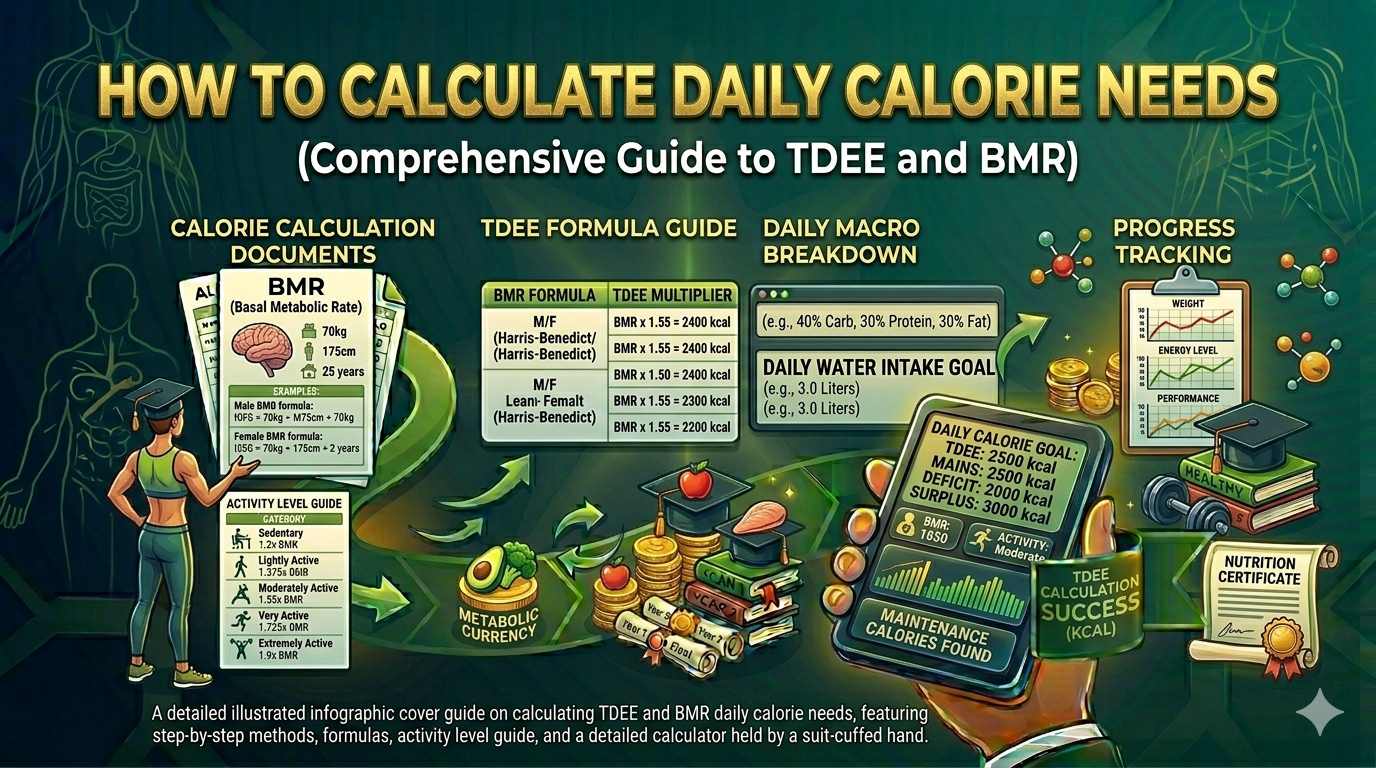
Understanding daily calorie needs is very important for maintaining a healthy lifestyle. Whether your goal is weight loss, weight gain, muscle building, or simply staying healthy, knowing how many calories your body needs every day can help you make smarter food and fitness decisions.
Many people either eat too much or too little because they do not understand how calorie requirements actually work. Some people think everyone needs the same number of calories, while others follow random diet plans without considering their own body needs.
In reality, calorie needs are different for every person. Factors like age, gender, body size, activity level, metabolism, and fitness goals all affect how many calories your body requires daily.
In this detailed guide, you will learn how to calculate daily calorie needs step by step, understand the factors that affect calorie requirements, and avoid common mistakes.
If you want to calculate your daily calorie needs instantly without manual calculations, you can use this tool:
👉 Calorie Intake Calculator
https://www.calculatemax.com/calculator/calorie-intake-calculator
What Are Calories?
Calories are units of energy.
Your body needs energy to perform every activity, including:
Walking
Working
Exercising
Breathing
Sleeping
Digesting food
The food and drinks you consume provide calories, which your body uses as fuel.
Without enough calories, the body cannot function properly.
Why Daily Calorie Needs Are Important
Understanding your calorie needs helps you maintain balance between food intake and energy usage.
If you consume more calories than your body uses, weight gain may happen.
If you consume fewer calories than your body uses, weight loss may happen.
This is why calorie management is important for:
Weight control
Fitness goals
Muscle building
Energy levels
Overall health
Knowing your daily requirement helps you make better nutrition decisions.
Factors That Affect Daily Calorie Needs
Daily calorie needs are not the same for everyone.
Several factors affect how many calories your body requires.
Age
Calorie needs change with age.
Children and teenagers often need more calories because their bodies are growing rapidly.
Older adults may need fewer calories because metabolism usually slows down over time.
Gender and Body Composition
Men often require more calories than women because they generally have more muscle mass and larger body size.
Muscle tissue burns more calories than fat tissue, even when the body is resting.
Because of this, body composition also affects calorie needs.
Activity Level
Activity level is one of the biggest factors affecting calorie requirements.
People with physically active lifestyles burn more calories throughout the day.
Someone who exercises regularly or works physically demanding jobs usually needs more calories compared to someone with a sedentary lifestyle.
Metabolism
Metabolism refers to how your body converts food into energy.
Some people naturally burn calories faster, while others burn calories more slowly.
A faster metabolism usually increases calorie requirements.
Fitness Goals
Your goals also affect calorie needs.
If your goal is weight loss, you may need fewer calories than your body burns.
If your goal is muscle gain or weight gain, you may need extra calories.
Maintenance calories are used when your goal is simply to maintain current weight.
Understanding Basal Metabolic Rate (BMR)
Basal Metabolic Rate, commonly called BMR, is the number of calories your body needs while resting.
Even when you are not moving, your body still uses energy for:
Breathing
Blood circulation
Organ function
Body temperature control
BMR forms the foundation of daily calorie calculations.
What is Total Daily Energy Expenditure (TDEE)?
TDEE stands for Total Daily Energy Expenditure.
It includes:
Basal Metabolic Rate
Physical activity
Exercise
Daily movement
Digestion energy
TDEE represents the total calories your body burns in an entire day.
Daily calorie needs are usually based on TDEE.
Step-by-Step Method to Calculate Daily Calorie Needs
Calculating calorie needs becomes easier when you follow the proper process.
First, calculate your BMR using your body information.
Next, adjust the result according to your activity level.
This gives your TDEE.
Then modify the value depending on your goal:
Lower calories for weight loss
Higher calories for muscle gain
Balanced calories for maintenance
👉 You can calculate instantly here:
https://www.calculatemax.com/calculator/calorie-intake-calculator
Example of Daily Calorie Calculation
Let’s understand this with a simple example.
Imagine two people with different lifestyles.
One person works at a desk and rarely exercises.
Another person exercises regularly and remains physically active.
Even if both people have similar body size, the active person will usually require more calories.
This shows why activity level matters in calorie calculations.
Why Calorie Balance Matters
Calorie balance determines whether your body gains, loses, or maintains weight.
If calorie intake matches calorie usage, weight usually remains stable.
If calorie intake is higher than usage, extra energy may be stored in the body.
If calorie intake is lower than usage, the body may use stored energy instead.
Understanding calorie balance is very important for managing body weight.
Daily Calories for Weight Loss
Weight loss usually requires a calorie deficit.
This means consuming fewer calories than the body burns.
However, extremely low-calorie diets are not healthy and may reduce energy levels.
Gradual and balanced calorie reduction is generally considered safer and more sustainable.
Daily Calories for Muscle Gain
Muscle building usually requires extra calories along with proper exercise.
The body needs additional energy and nutrients to build muscle tissue.
Protein intake and strength training also play an important role.
Common Mistakes People Make
Many people estimate calories incorrectly.
Some ignore portion sizes.
Others follow diet plans designed for different body types.
Some people focus only on calories while ignoring nutrition quality.
Another common mistake is overestimating calories burned during exercise.
These mistakes can affect results significantly.
Why Online Calorie Calculators Are Helpful
Manual calorie calculations can become confusing because many factors are involved.
An online calculator makes the process quick and accurate.
You simply enter:
Age
Weight
Height
Activity level
Fitness goal
The calculator instantly estimates your daily calorie needs.
👉 Use it here:
https://www.calculatemax.com/calculator/calorie-intake-calculator
Real-Life Importance of Calorie Management
Understanding calorie needs helps improve:
Weight management
Fitness progress
Energy levels
Eating habits
Health awareness
People who understand calorie balance usually make healthier lifestyle decisions.
Calories and Food Quality
Not all calories are equal in terms of nutrition.
Some foods provide vitamins, minerals, protein, and fiber along with calories.
Other foods mainly provide calories with little nutritional value.
This is why healthy eating is about both calorie quantity and food quality.
Tips for Managing Daily Calories
Track food intake regularly.
Pay attention to portion sizes.
Stay physically active.
Avoid excessive processed foods.
Choose balanced meals with proper nutrition.
Use calorie calculators to monitor progress accurately.
Final Thoughts
Calculating daily calorie needs is one of the best ways to understand your body and manage your health more effectively.
The key is to understand that calorie requirements are different for every person based on activity level, metabolism, and goals.
Instead of guessing, using a calorie calculator can provide faster and more accurate estimates.
👉 Try it here:
https://www.calculatemax.com/calculator/calorie-intake-calculator