
How Much Protein Do You Need Per Day? (Complete Guide)
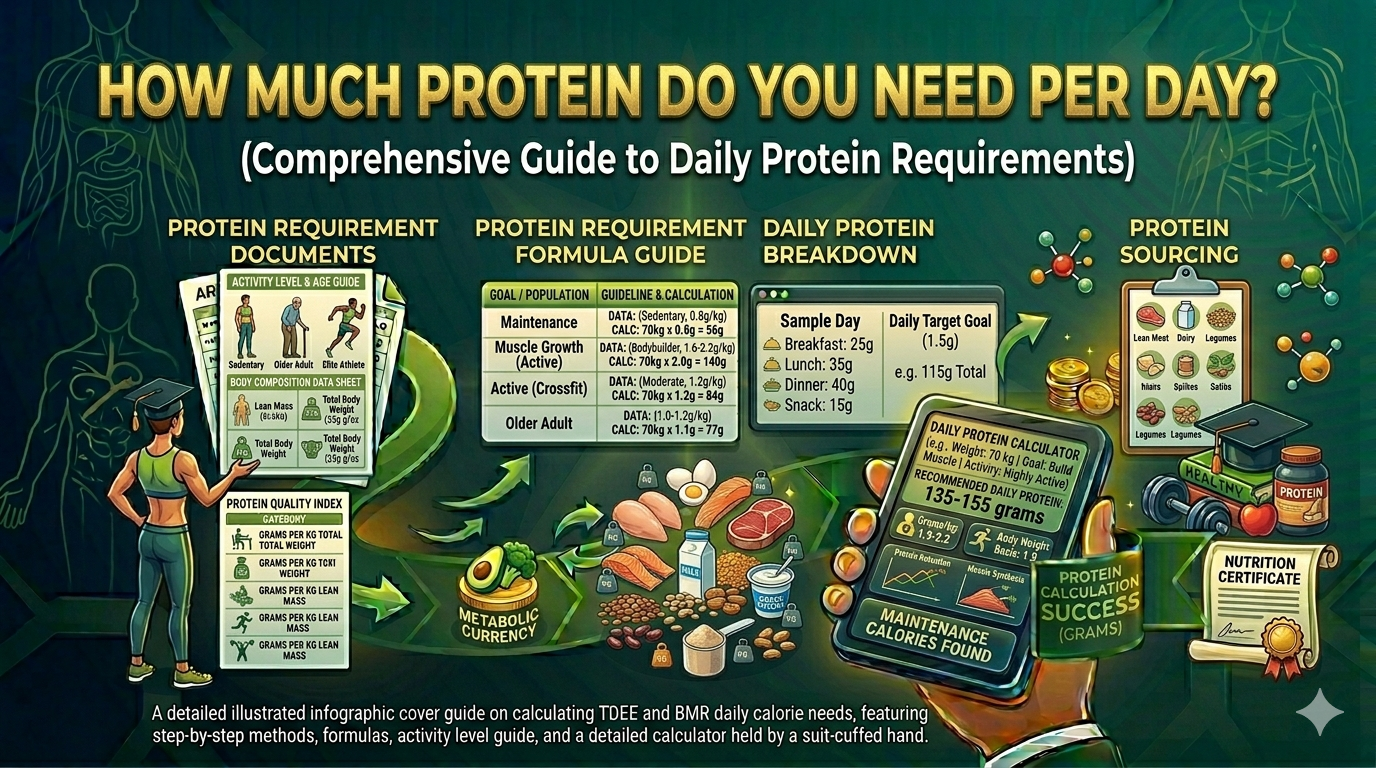
Protein is one of the most important nutrients for the human body. It plays a major role in muscle growth, body repair, strength, energy, recovery, and overall health. Every cell in the body uses protein in some way, which is why getting enough protein daily is extremely important.
However, many people still do not know how much protein they actually need per day. Some people eat too little protein without realizing it, while others consume excessive amounts because of fitness trends and online advice.
The truth is that protein needs are different for every person. Your daily protein requirement depends on factors like age, body weight, activity level, fitness goals, muscle mass, and lifestyle.
In this detailed guide, you will learn how protein requirements work, how to calculate your daily protein needs, and how much protein may be suitable for different goals like muscle gain, weight loss, or general health.
If you want to calculate your daily protein needs instantly, you can use this tool:
👉 Protein Intake Calculator
https://www.calculatemax.com/calculator/protein-intake-calculator
What is Protein?
Protein is a major nutrient that helps build and repair body tissues.
Your muscles, skin, bones, hair, and organs all depend on protein.
Protein is made from smaller units called amino acids. These amino acids help the body:
Build muscles
Repair tissues
Support recovery
Maintain body functions
Produce enzymes and hormones
Without enough protein, the body cannot function properly.
Why Protein is Important
Protein is important for people of all ages.
Children need protein for growth and development.
Adults need protein for muscle maintenance and body repair.
Older adults need protein to help maintain strength and reduce muscle loss.
Protein also helps:
Improve recovery after exercise
Support immune function
Increase fullness after meals
Maintain healthy body composition
This is why protein is considered one of the most essential nutrients.
How Protein Needs Are Different for Everyone
Many people think everyone should eat the same amount of protein daily, but this is not true.
Protein requirements vary from person to person.
Some important factors include:
Body weight
Age
Activity level
Exercise intensity
Fitness goals
Muscle mass
Lifestyle
Because of these differences, protein intake should be personalized.
Body Weight and Protein Needs
Body weight is one of the biggest factors in protein calculation.
Generally, larger individuals require more protein because they have more body tissue to maintain.
Most protein recommendations are based on body weight calculations.
This is why two people with different body sizes usually need different protein amounts.
Activity Level and Protein Intake
Physical activity greatly affects protein requirements.
People who exercise regularly often need more protein than people with sedentary lifestyles.
Strength training and intense workouts increase muscle repair needs.
Athletes and physically active individuals usually require higher protein intake for recovery and performance.
Protein Needs for Muscle Gain
Protein is especially important for muscle growth.
When people perform resistance or strength training, muscles experience stress and require repair.
Protein provides the building blocks needed for muscle recovery and growth.
Without enough protein, muscle-building progress may slow down.
Protein Needs for Weight Loss
Protein is also important during weight loss.
High-protein diets often help people feel fuller for longer periods.
This may reduce overeating and help control appetite.
Protein also helps preserve muscle mass while reducing body fat.
Because of this, many weight loss plans include increased protein intake.
Protein Needs for General Health
Even people who are not exercising heavily still need adequate protein daily.
The body constantly uses protein for maintenance and repair.
Healthy protein intake supports:
Hair health
Skin health
Organ function
Immune system support
Energy balance
Proper protein intake contributes to overall wellness.
Step-by-Step Method to Calculate Protein Needs
Calculating protein needs becomes easier when you follow a proper method.
First, determine your body weight.
Next, consider your activity level and fitness goals.
Then estimate your daily protein requirement based on those factors.
People with higher activity levels or muscle-building goals usually need more protein than inactive individuals.
👉 You can calculate instantly here:
https://www.calculatemax.com/calculator/protein-intake-calculator
Example of Protein Requirement Differences
Let’s understand this with a simple example.
Imagine two people with different lifestyles.
One person has a sedentary office job and rarely exercises.
The other person regularly performs strength training and physical activity.
Even if both individuals have similar body weight, the active person will usually require more protein because of increased muscle repair and recovery needs.
This shows why lifestyle matters in protein calculation.
Best Sources of Protein
Protein can come from both animal and plant-based foods.
Some common protein-rich foods include:
Eggs
Fish
Meat
Dairy products
Beans
Lentils
Nuts
Seeds
Soy products
Different foods provide different amounts and qualities of protein.
A balanced diet usually includes a variety of protein sources.
Difference Between Complete and Incomplete Protein
Some protein sources contain all essential amino acids, while others may lack certain amino acids.
Complete proteins usually provide all essential amino acids needed by the body.
Incomplete proteins may need to be combined with other foods for better balance.
Understanding protein quality helps improve nutrition planning.
Common Mistakes People Make
Many people either eat too little or too much protein.
Some rely only on supplements while ignoring natural food sources.
Others assume that more protein automatically means faster muscle growth.
Another common mistake is ignoring total nutrition balance.
Protein is important, but overall diet quality also matters.
Protein Supplements vs Natural Foods
Protein supplements are popular, especially among fitness enthusiasts.
However, natural foods also provide important vitamins, minerals, and nutrients in addition to protein.
Supplements can be convenient, but they should not completely replace balanced meals.
A healthy diet usually focuses on real food sources first.
Why Online Protein Calculators Are Helpful
Manual protein calculation can become confusing because many factors affect requirements.
An online calculator makes the process quick and simple.
You simply enter:
Body weight
Activity level
Goal
Lifestyle details
The calculator instantly estimates your daily protein needs.
👉 Use it here:
https://www.calculatemax.com/calculator/protein-intake-calculator
Real-Life Importance of Proper Protein Intake
Understanding protein needs helps improve:
Muscle recovery
Fitness performance
Weight management
Energy levels
Overall health
People who manage protein intake properly often experience better physical performance and healthier body composition.
Tips for Better Protein Intake
Include protein in every meal.
Choose balanced protein sources.
Stay consistent instead of consuming excessive protein occasionally.
Combine proper protein intake with exercise and healthy eating habits.
Use calculators to monitor intake more accurately.
Protein and Healthy Aging
Protein becomes even more important as people grow older.
Muscle loss naturally increases with age.
Adequate protein intake can help maintain strength and mobility.
This is why older adults are often encouraged to pay close attention to protein intake.
Final Thoughts
Protein is one of the most important nutrients for health, fitness, recovery, and body maintenance.
The amount of protein you need depends on your body weight, activity level, lifestyle, and fitness goals.
Instead of guessing your requirements, using a protein calculator can provide a more accurate estimate and help you plan your diet better.
👉 Try it here:
https://www.calculatemax.com/calculator/protein-intake-calculator