
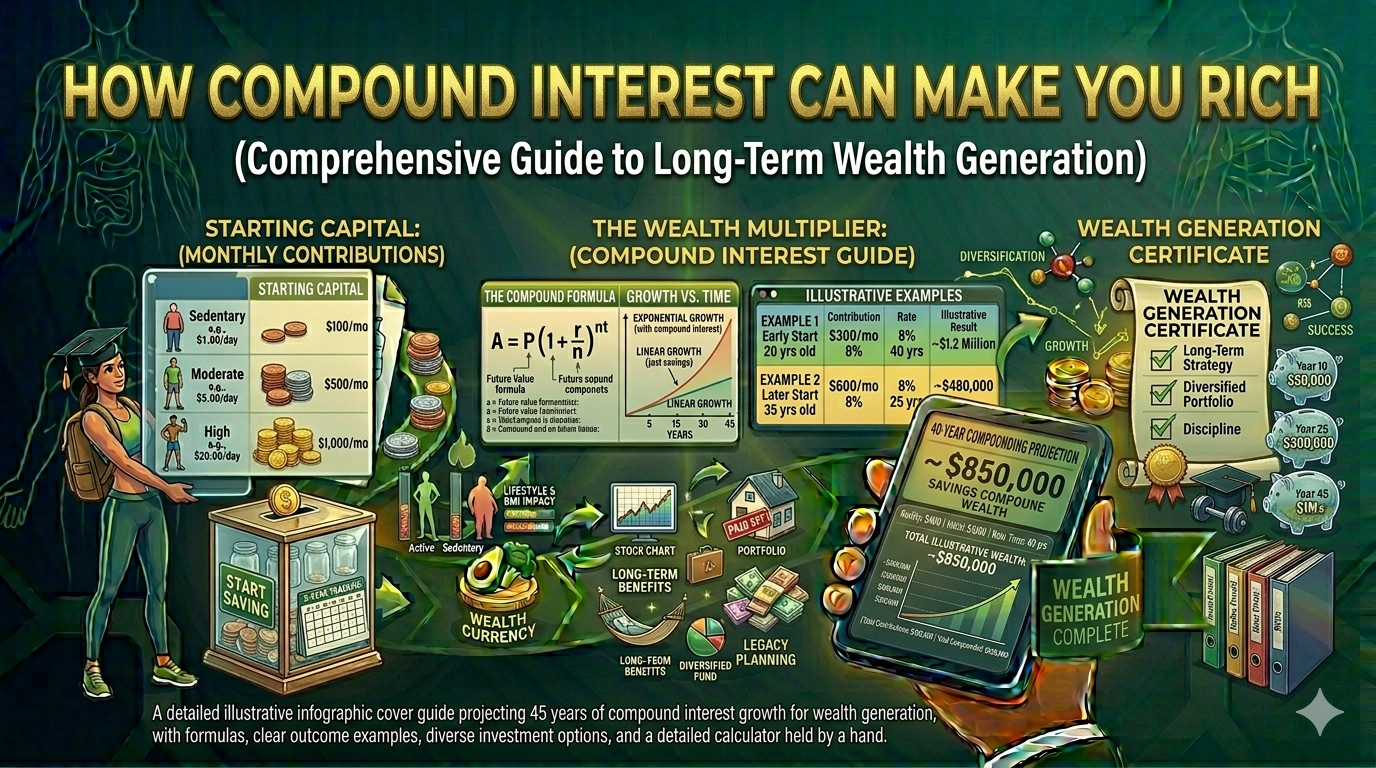
Compound interest is often called one of the most powerful concepts in finance and investing. Many successful investors, business owners, and financially smart people understand how compound interest works and use it to grow their money over time.
At first, compound interest may look like a simple financial term, but its long-term effect can become surprisingly powerful. The biggest reason compound interest is so important is because it allows your money to grow not only on the original amount you save or invest, but also on the interest earned over time.
This creates a snowball effect where money continues growing larger and faster as time passes.
Many people think becoming financially strong requires earning huge amounts of money immediately. In reality, consistent saving and long-term investing combined with compound interest can create massive growth even from smaller starting amounts.
In this detailed guide, you will learn what compound interest is, how it works, why time matters so much, and how compound interest can help build long-term wealth.
You already have related calculators on your website that can help users estimate compound growth and future savings.
What is Compound Interest?
Compound interest is interest earned on both:
The original amount of money
The previously earned interest
This means your money keeps growing on top of earlier growth.
Unlike simple interest, where interest is calculated only on the original amount, compound interest continuously increases the growth base.
Over time, this creates much faster financial growth.
Why Compound Interest is So Powerful
The real power of compound interest comes from time and consistency.
At the beginning, growth may look slow.
But as interest keeps getting added back into the total amount, future growth becomes larger and larger.
This creates an accelerating effect where money grows faster over longer periods.
That is why compound interest is often considered one of the strongest long-term wealth-building tools.
Understanding the Snowball Effect
Compound interest works like a snowball rolling downhill.
At first, the snowball is small.
As it continues moving, it collects more snow and grows larger.
Similarly, compound interest keeps adding growth on previous growth.
Over time, the total increase becomes much bigger than many people expect.
Difference Between Simple Interest and Compound Interest
Many people confuse simple interest with compound interest.
Simple interest only calculates growth using the original amount.
Compound interest calculates growth using:
Original money
Previously earned interest
This difference may look small initially, but over many years, compound interest usually creates much larger growth.
This is why long-term investors prefer compounding.
Why Time is the Most Important Factor
Time is one of the biggest reasons compound interest becomes powerful.
The longer money remains invested or saved, the more opportunities it gets to grow repeatedly.
Even small amounts can grow significantly if given enough time.
People who start saving early often benefit much more because their money has more years to compound.
Why Starting Early Matters
Many people delay saving or investing because they think they can start later.
However, compound interest rewards early action heavily.
Someone who starts saving earlier often builds more wealth than someone who starts later with larger amounts.
This happens because early savings get more time to compound.
Time is often more important than the initial amount itself.
How Regular Contributions Increase Growth
Compound interest becomes even stronger when people continue adding money regularly.
Small monthly or daily savings added consistently can create large long-term growth.
This is because every new contribution also starts earning compound growth over time.
Consistency plays a major role in financial growth.
Step-by-Step Understanding of Compound Growth
Compound growth works in repeating stages.
First, money earns interest.
Next, the earned interest gets added to the total balance.
Then future interest is calculated using the larger balance.
This cycle repeats continuously.
As the total amount grows larger, future growth also becomes larger.
This is why compound interest speeds up over time.
Why Patience is Important
One reason many people fail to benefit from compound interest is lack of patience.
At the beginning, progress may look slow.
Some people lose motivation because they expect instant results.
However, compound interest becomes most powerful during the later years when growth starts accelerating more rapidly.
Long-term patience is extremely important.
Compound Interest and Investing
Compound interest is closely connected with investing.
Savings accounts, investments, retirement plans, and long-term financial assets often use compounding.
The longer investments remain untouched, the stronger the compounding effect usually becomes.
This is why long-term investing is often recommended for wealth building.
Why Consistency Beats Perfection
Many people think they need huge amounts of money to benefit from compound interest.
In reality, consistency matters much more than starting with large amounts.
Even smaller regular contributions can create meaningful growth over time.
The habit of saving and investing regularly is often more important than the starting amount.
Real-Life Benefits of Compound Interest
Compound interest can support many financial goals such as:
Emergency savings
Retirement planning
Education funds
Wealth building
Financial independence
Long-term investments
People who understand compounding often make smarter long-term financial decisions.
Common Mistakes People Make
Many people make mistakes that reduce the benefits of compound interest.
Some start too late.
Others withdraw money too early before compounding has enough time to grow.
Some people save inconsistently.
Another common mistake is expecting fast results and losing patience.
Avoiding these mistakes helps maximize long-term growth.
Why Inflation Matters
While compound interest helps money grow, inflation can reduce purchasing power over time.
This is why many people focus on investments or savings options that grow faster than inflation.
Understanding both compound growth and inflation is important for long-term financial planning.
Compound Interest and Financial Freedom
Financial freedom usually comes from long-term smart habits instead of quick shortcuts.
Compound interest rewards:
Patience
Discipline
Consistency
Long-term thinking
People who understand compounding often build stronger financial security over time.
Why Compound Interest is Called “Money Working for You”
One of the biggest advantages of compound interest is that your money starts generating additional growth automatically.
Instead of relying only on active income, compound growth allows money itself to contribute toward future growth.
This is why many people describe compound interest as “making money work for you.”
Why Financial Education Matters
Many people spend years earning money but never learn how compound growth works.
Understanding compound interest can completely change how people think about:
Saving
Investing
Spending
Financial planning
Financial knowledge often leads to better long-term decisions.
How Compound Interest Builds Wealth Slowly
Compound interest usually does not create instant wealth overnight.
Instead, it builds wealth gradually through steady growth over many years.
This slow and consistent growth is what makes it sustainable and powerful.
People who stay consistent for long periods often see the biggest results.
Final Thoughts
Compound interest is one of the most powerful tools for building long-term wealth and financial stability.
The key reasons it works so well are:
Time
Consistency
Patience
Reinvested growth
Even smaller amounts saved or invested regularly can grow significantly over time when compound interest is allowed to work for many years.
The earlier someone starts, the stronger the long-term results can become.
You already have related calculators on your website that can help users estimate compound growth, savings goals, and long-term financial planning more accurately.